Train hard enough to improve, smart enough to come back tomorrow.
Jiu Jitsu is one of the most effective grappling arts on the planet, but it also asks a lot from your joints, your skin, and your ego if you let it. For adult beginners especially, the biggest worry is not learning techniques, it is getting sidelined by a tweak that could have been avoided. We take that concern seriously because consistent training is what creates progress, confidence, and real fitness.
The data backs up why prevention matters. In one Brazilian jiu-jitsu study, 73.2 percent of participants reported at least one injury, and 48.7 percent of injuries required medical attention. Another long-term study tracked 1052 injuries over three years and reported an incidence rate of 308 injuries per 1000 athletes per year. That sounds intense, but here is the key point we want you to hear clearly: many common training injuries are linked to behavior choices like intensity, partner selection, and when you choose to tap.
In this guide, we will walk you through practical, beginner-friendly ways to train safer, recover better, and build the kind of Jiu Jitsu practice you can keep for years. If you are searching for Adult Brazilian Jiu Jitsu in Yaphank or looking into Jiu Jitsu in Yaphank, NY and wondering if you are too out of shape or too busy, this is for you.
Why injuries happen in Jiu Jitsu (and why most are preventable)
Most injuries we see are not dramatic accidents. They are usually small decisions stacking up: rolling too many hard rounds too soon, trying to escape late from a tight arm lock, or staying in a bad position with a tired neck because you do not want to “lose.” In competition data, the elbow is often the most commonly injured joint, and arm bars are a major mechanism of injury. That is not a reason to be afraid of training. It is a reason to respect leverage.
We also want to be honest about the difference between discomfort and danger. Jiu Jitsu includes pressure, awkward angles, and fatigue. You will feel sore at times. The goal is to avoid the kind of pain that changes how you move, affects your sleep, or sticks around for weeks. Our job is to teach you how to recognize the line and how to train on the right side of it.
Top 10 injury prevention tips we coach every week
These are the habits we return to again and again because they work, especially for adult hobbyists with jobs, families, and a limited margin for reckless training.
1. Tap early and tap clearly
If a submission is locked and you are not already escaping, tap. Early tapping is repeatedly identified as one of the clearest injury-reduction habits in Brazilian jiu-jitsu, and it is even more important with joint locks like arm bars. Tap with your hand, say “tap,” and do it before the joint is at end range.
2. Choose controlled partners and avoid ego rounds
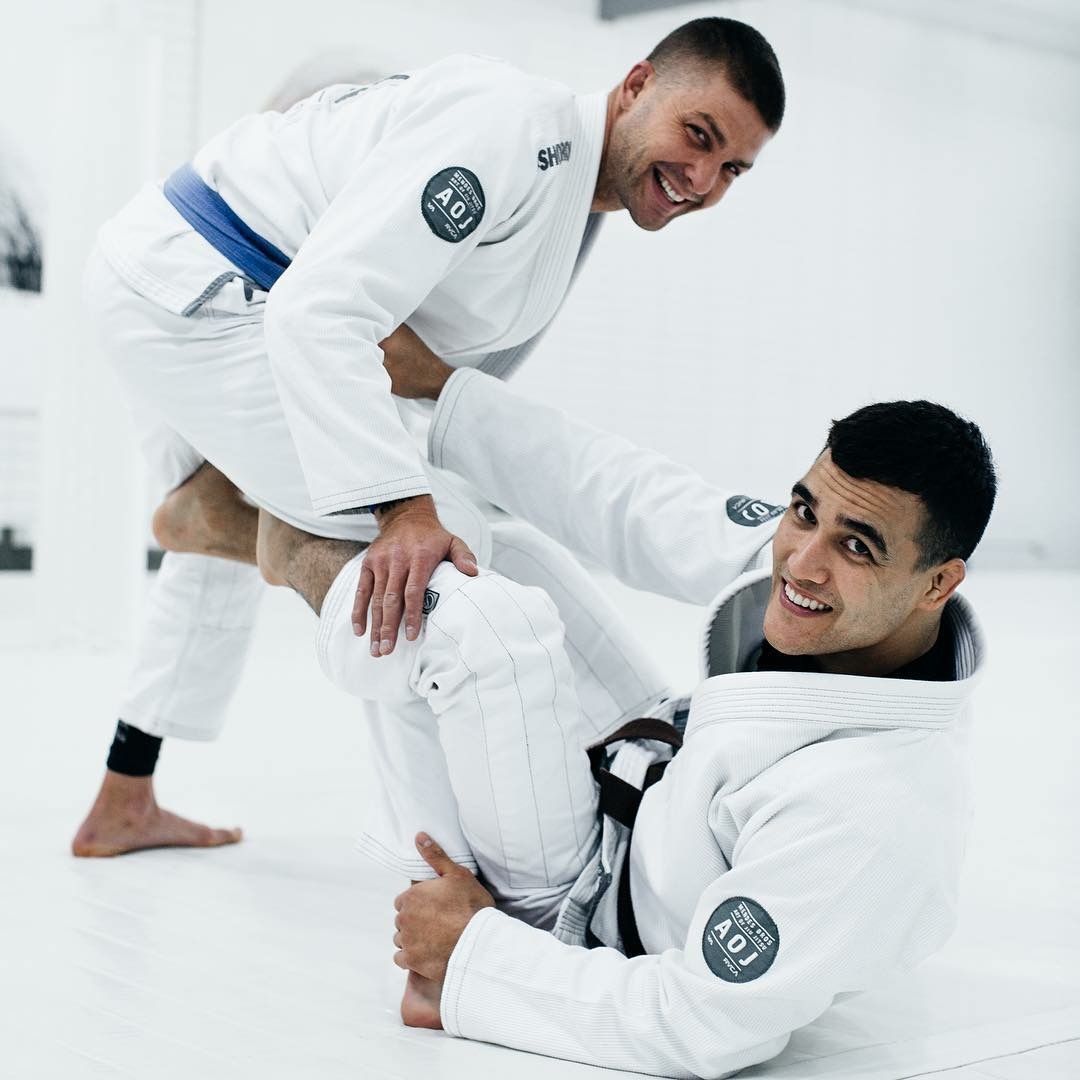
Most people are friendly, but not every round needs to be a war. We encourage you to seek partners who can match your pace, especially in your first few months. If you feel a round speeding up into chaos, slow it down, reset, or ask to drill instead.
3. Manage your weekly training load like an adult, not a superhero
A big injury trigger is going from zero to five days a week because motivation is high. We love the excitement, but connective tissue adapts slower than your cardio. Add rounds and days gradually so your elbows, knees, and neck can keep up.
4. Warm up with intention, not just sweat
A good warm-up should prepare your joints for the exact shapes you will hit while grappling: hip rotation, shoulder stability, neck control, and getting up off the ground. We like warm-ups that feel like technique, not random exhaustion.
5. Start rounds with positional goals
Beginners get hurt when everything turns into scrambles. Instead, pick a goal like “frame and recover guard” or “hold side control without squeezing.” Technique-first rounds reduce unpredictable movement, which reduces surprise injuries.
6. Protect your neck by learning posture and frames early
A sore neck is common when you are new, especially if you lead with your head during takedowns or try to bench press people off you. We focus on posture, frames, and hip movement so your neck is not doing your whole body’s job.
7. Build strength where Jiu Jitsu asks for it
You do not need to be a powerlifter. But basic strength in your posterior chain, shoulders, grip, hips, and core helps protect your joints. Even two short sessions a week can make a difference.
8. Rest when you are “off,” not when you are broken
If your elbow feels cranky or your knee feels unstable, that is information. Taking a day off, drilling lightly, or skipping hard sparring can prevent a minor strain from becoming a real setback.
9. Keep your skin safe with consistent hygiene
Skin infections are a modern reality in shared training spaces. Wash your gear after every class, shower soon after training, and keep nails trimmed. If you have a suspicious rash, we want you to sit out and get it checked. It protects you and it protects your teammates.
10. Communicate with us before class
Tell us about old injuries, surgeries, or areas you worry about. We can give you safer options, modify positions, and guide partner choices. Quietly “pushing through” is how small problems turn into longer layoffs.
Beginner classes and structured progression: why your first months matter
The first month is when people are most likely to move unpredictably. That is not a character flaw. It is just what happens before you know how to base, frame, and breathe under pressure. Safety improves quickly when you learn structure.
Our beginner-friendly approach emphasizes controlled drilling, clear boundaries during sparring, and a progression that builds skill before intensity. We want you to understand where your limbs are, how to tap, and how to keep your partner safe as well. When new students jump straight into hard rolling without those basics, the room gets chaotic fast and injuries follow.
A small detail that matters: we coach you to slow down. When you move with intention, you give your partner time to react, and you give yourself time to notice when a joint is in trouble. That is not “being soft.” That is training like someone who wants to improve for years.
Your first month safety plan (simple, realistic, and sustainable)
If you are starting Adult Brazilian Jiu Jitsu in Yaphank and your schedule is already full, this is a practical way to ease in without losing momentum.
Week 1: Learn positions, tapping, and breathing
Show up, focus on fundamentals, and keep intensity moderate. Expect to feel awkward. That is normal. If you spar, keep rounds light and prioritize safety habits over “winning.”
Week 2: Add a little volume, not a lot of intensity
Consider a second or third class, but do not add extra hard rounds yet. Your goal is to repeat basics: posture, frames, and safe movement.
Week 3: Increase round count gradually
If you feel good, add one more round, not five. Think of it like building mileage. Your joints should feel used, not beaten up.
Week 4: Start tracking recovery
Pay attention to sleep, hydration, and soreness patterns. If your elbows or neck are consistently irritated, we adjust your training plan. This is where long-term habits start to lock in.
Smart rolling rules that keep training partners safe
Jiu Jitsu works because we can train close to real resistance, but the price of that is responsibility. We take partner safety personally, and we encourage you to do the same.
First, match intensity. If your partner is flowing, flow back. If your partner is newer, slow down and be predictable. Second, avoid ripping submissions. Apply control, give time to tap, and release cleanly. Third, do not fight out of fully locked joint submissions with explosive strength. That is how elbows and shoulders get hurt, and the elbow is already one of the most commonly injured joints in competition settings.
If you are unsure whether something is allowed or appropriate in a round, ask us. That quick check prevents misunderstandings and helps the whole room stay consistent.
Off-the-mat habits that protect your joints and help you recover
Busy adults often assume recovery is complicated. It does not have to be. A few basics done consistently can make your body feel noticeably better on the mats.
Sleep is the biggest performance enhancer that is not talked about enough. If you are under-slept, your reaction time drops and your tolerance for strain gets worse. Hydration and protein help you recover from the muscular side of training, while mobility work keeps you moving comfortably through grappling positions.
If you want a simple strength focus, start here: hinge patterns for hips, rows for the upper back, carries for grip and trunk, and controlled neck work. Keep it moderate and repeatable. We are not trying to crush you in the gym and then crush you on the mats too.
Hygiene and gear: the unglamorous part of training that keeps you healthy
Infection prevention is injury prevention. Skin infections can take you off the mats just as surely as a sprained elbow. Our standards are straightforward: clean uniforms and rash guards, trimmed nails, and no training with open wounds or suspicious skin issues.
Gear can help too. A mouthguard is a smart idea for many students, especially once rounds get more dynamic. Finger tape can support sore joints if you are prone to jams. For knees, the best protection is often better alignment and pacing, but a light sleeve can provide warmth and awareness.
Whether you train gi or no-gi, safety comes down to control and communication more than clothing. Gi can slow scrambles but introduces grips that can stress fingers. No-gi can be slippery and faster. We help you adapt either way.
When to stop training and get checked
We love toughness, but we love longevity more. If you notice any of the following, pause training and get evaluated by a qualified medical professional:
• Swelling, bruising, or visible deformity around a joint
• Sharp pain during a specific movement, especially under load
• Numbness, tingling, or radiating pain into the arm or leg
• A joint that feels unstable or suddenly weak
• Pain that does not improve after a few days of rest and light movement
For day-to-day aches, talk to us. Many issues are manageable with small adjustments, like avoiding certain grips for a week or choosing positional rounds instead of full sparring.
FAQ for adult beginners in Yaphank
Is Jiu Jitsu safe for beginners?
Yes, when you train with structure, tap early, and progress gradually. Risk goes up when intensity outpaces skill, which is why we emphasize fundamentals and controlled rounds.
Do I need to be in shape before starting?
No. Training is how you get in shape. We scale intensity, and you build cardio and strength over time without needing to “prepare” beforehand.
How often should I train as a new adult student?
Most beginners do best with two to three classes per week at moderate intensity. Consistency beats occasional all-out weeks followed by time off.
What if I have neck, knee, elbow, or shoulder pain?
Tell us before class so we can modify your training and help you choose safe partners and positions. If pain is sharp, worsening, or limiting motion, get checked.
Should I tap early to joint locks and chokes?
Yes. Early tapping is one of the simplest ways to reduce injury risk. You can always restart the position and learn the defense without gambling with your joints.
Ready to Train Smarter in Yaphank
Safety is not a side topic in Jiu Jitsu. It is the foundation that lets you train consistently, improve faster, and feel good doing it. When you learn to manage intensity, tap early, and build solid habits on and off the mats, you stop thinking of training as risky and start thinking of it as sustainable.
At
Breathe Jiu Jitsu, we coach injury prevention as part of everyday practice, not as an afterthought once something hurts. If you are looking for Jiu Jitsu in Yaphank, NY and you want a place where adult beginners can train hard without reckless chaos, we are ready when you are.
Build stronger fundamentals and sharpen your technique by
joining a Brazilian Jiu-Jitsu class at Breathe Jiu Jitsu.