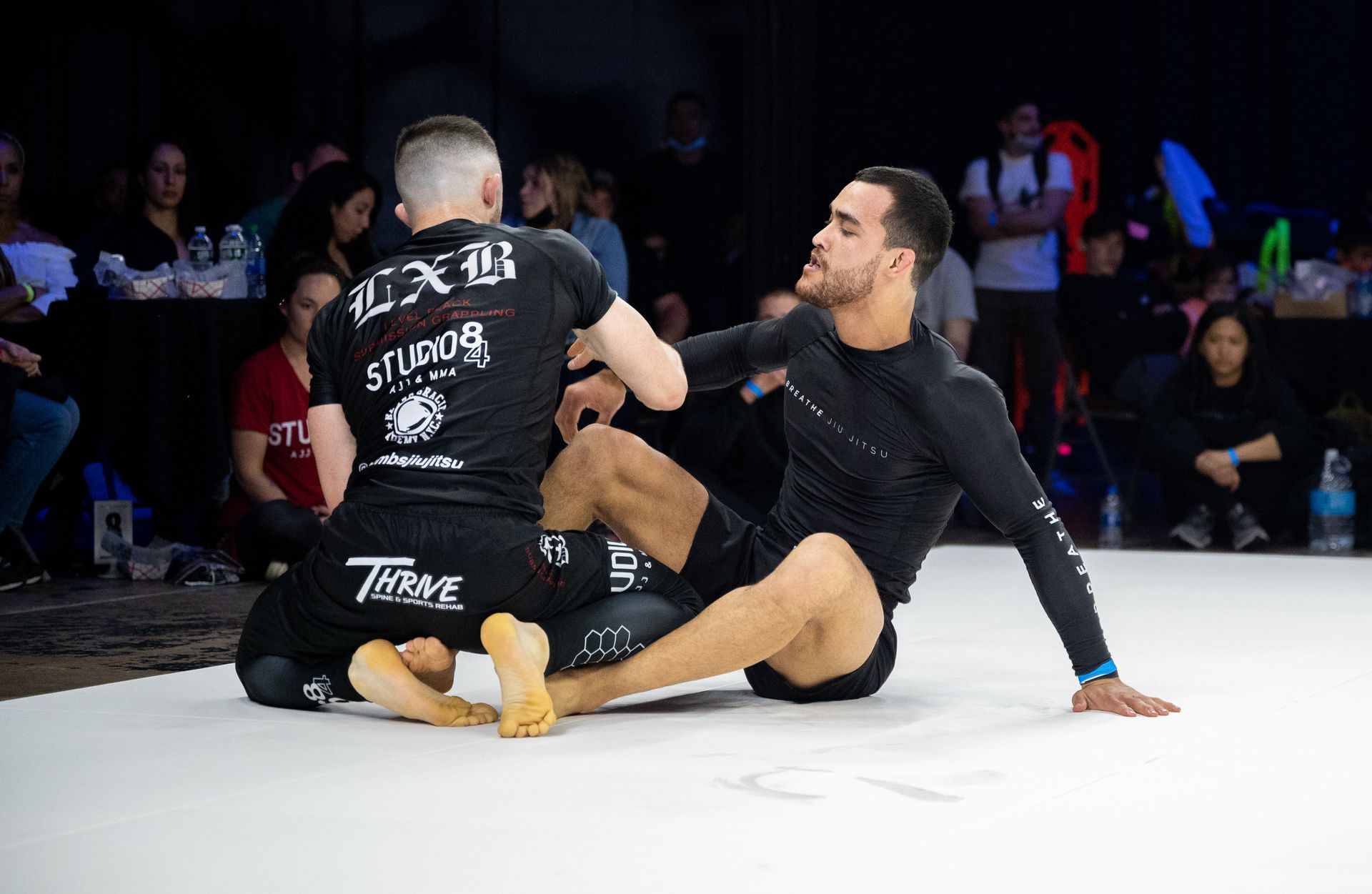
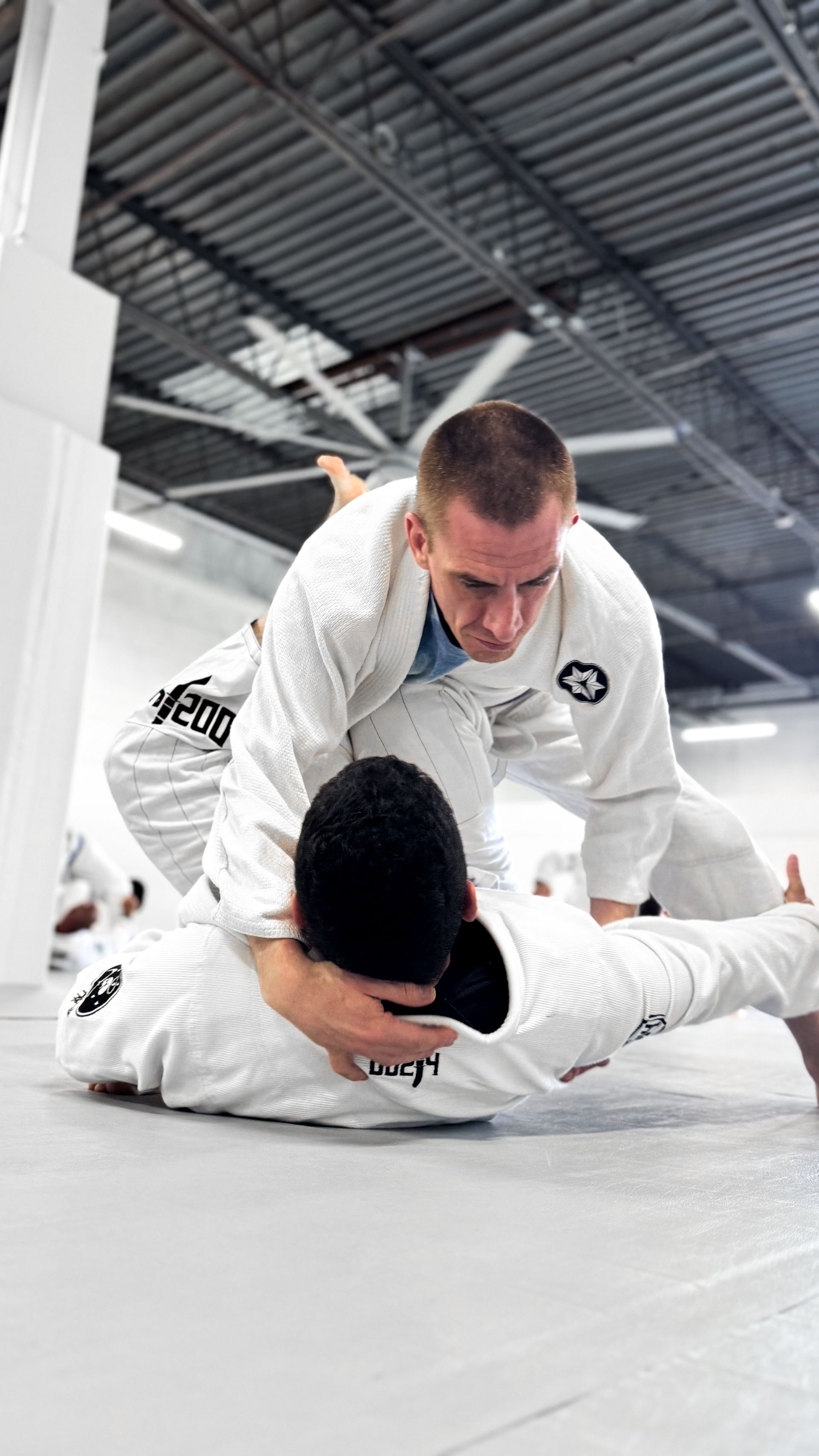
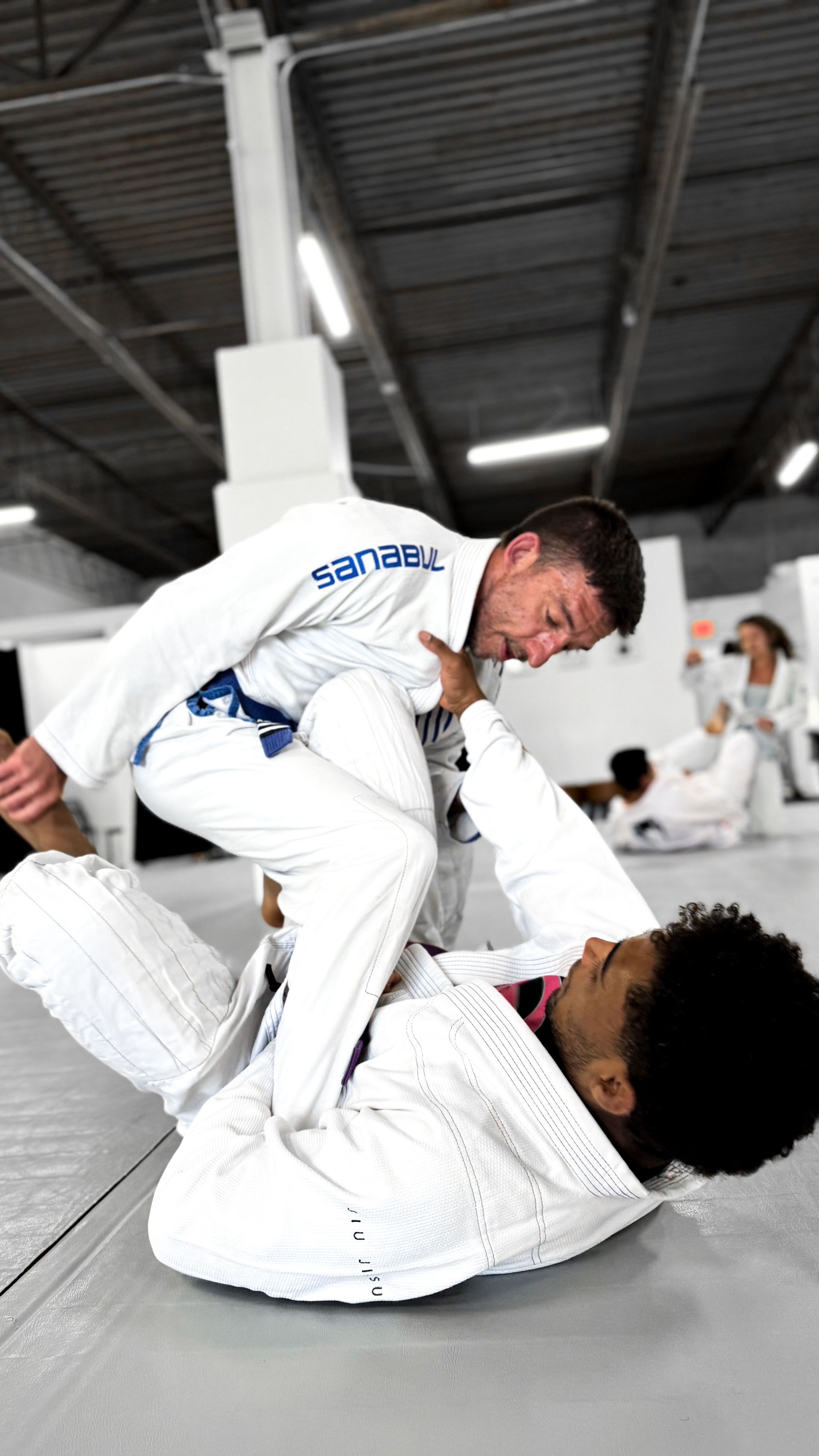
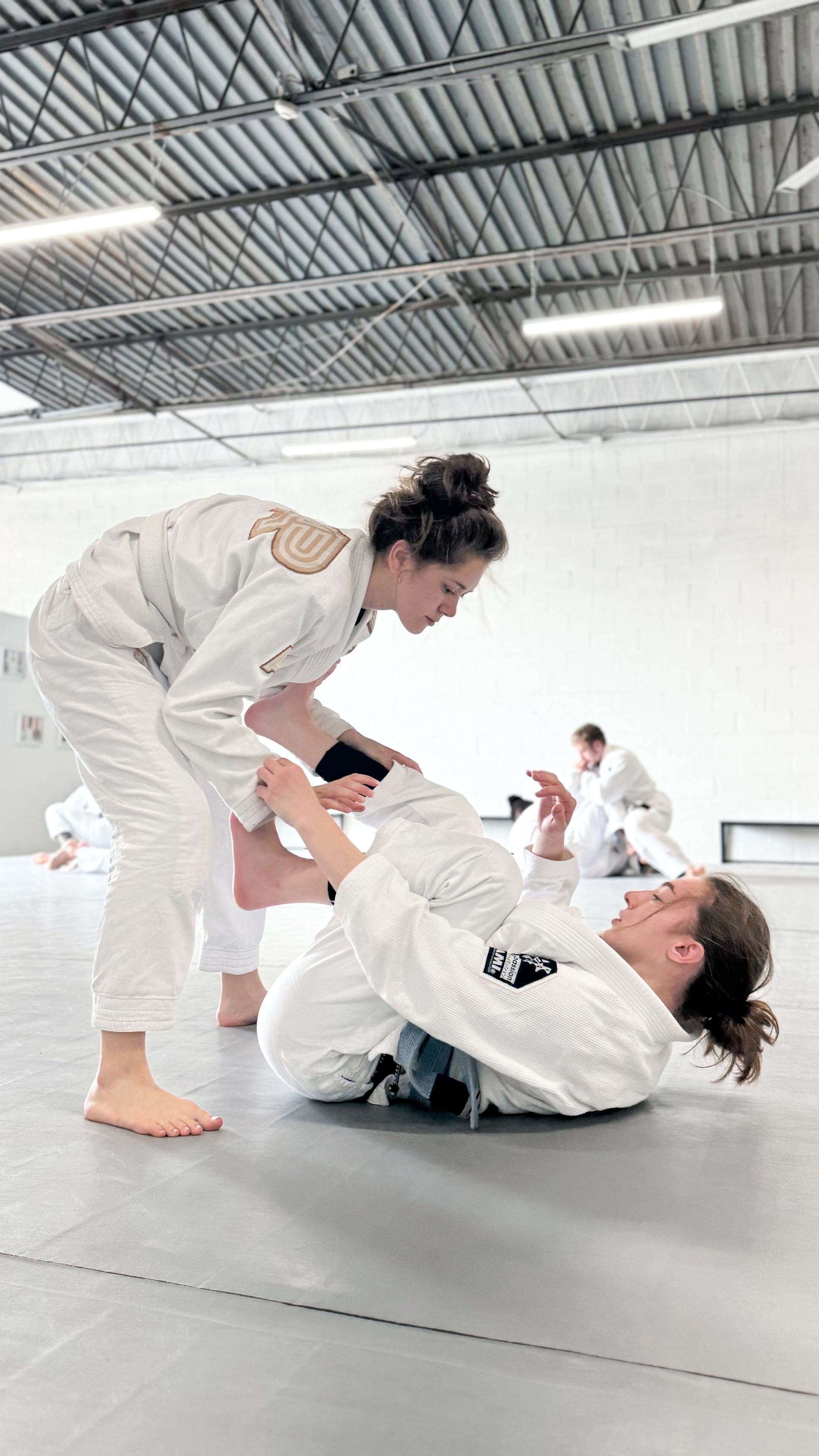
Jiu Jitsu gives you a safe way to practice staying calm under pressure, then carry that calm back into everyday life.
Anxiety has a way of showing up everywhere, in your chest on the drive to work, in your thoughts at 2 a.m., and in that tight, impatient feeling when you are trying to hold it together for everyone else. When you are looking for something that helps but does not feel like another task on your to do list, Jiu Jitsu can be a surprisingly practical answer.
We see it all the time with adults who walk in feeling wound up, unsure, or just plain stressed. Our training is physical, yes, but it is also structured. That structure matters when your nervous system is tired. With the right coaching, a steady pace, and clear goals, you can turn a busy mind into something more focused and steady.
This matters in Yaphank, where life is often a mix of commuting, family responsibilities, and long workdays. Many adults want real stress relief and confidence without needing a perfect starting point. Our job is to give you an environment where you can learn, move, breathe, and build resilience one class at a time.
Why Jiu Jitsu connects so well to anxiety relief
Anxiety is not only a feeling. It is a full body experience. Your breathing changes. Your shoulders creep up. Your awareness gets narrow, then your thoughts race. Jiu Jitsu works because it trains the same systems that anxiety hijacks, breath, attention, and decision making, but it does it in a controlled setting.
Recent research has been moving beyond anecdotes. Studies in multiple adult populations have found that Brazilian jiu-jitsu participation is associated with improvements in anxiety symptoms and overall wellbeing, including groups like veterans and emergency services personnel. Other work connects better mental health outcomes in BJJ with higher self-control, resilience, and life satisfaction, along with lower aggression patterns. The key word is associated. We do not present training as treatment or a cure. But the trend in the evidence lines up with what many adults report after they train consistently.
So what is the real link? It is not magic. It is practice. You repeatedly face manageable pressure, learn a response, and feel yourself improve. That combination builds self-efficacy, the belief that you can handle hard things, which research continues to connect to stronger mental outcomes in grappling athletes across belt levels.
The mechanism: breath, movement, and skill-building under pressure
Controlled breathing when your body wants to panic
If you have ever noticed your breathing get shallow during stress, you already understand the first lesson. In Jiu Jitsu, holding your breath makes everything harder. You gas out faster, you tense up, and you stop thinking clearly. We coach you to notice that and correct it.
Over time, you learn to breathe when you are uncomfortable, not after the discomfort ends. That is a small shift that can be huge for anxious adults. You are practicing regulation in real time, and you get immediate feedback from your body.
Problem-solving replaces rumination
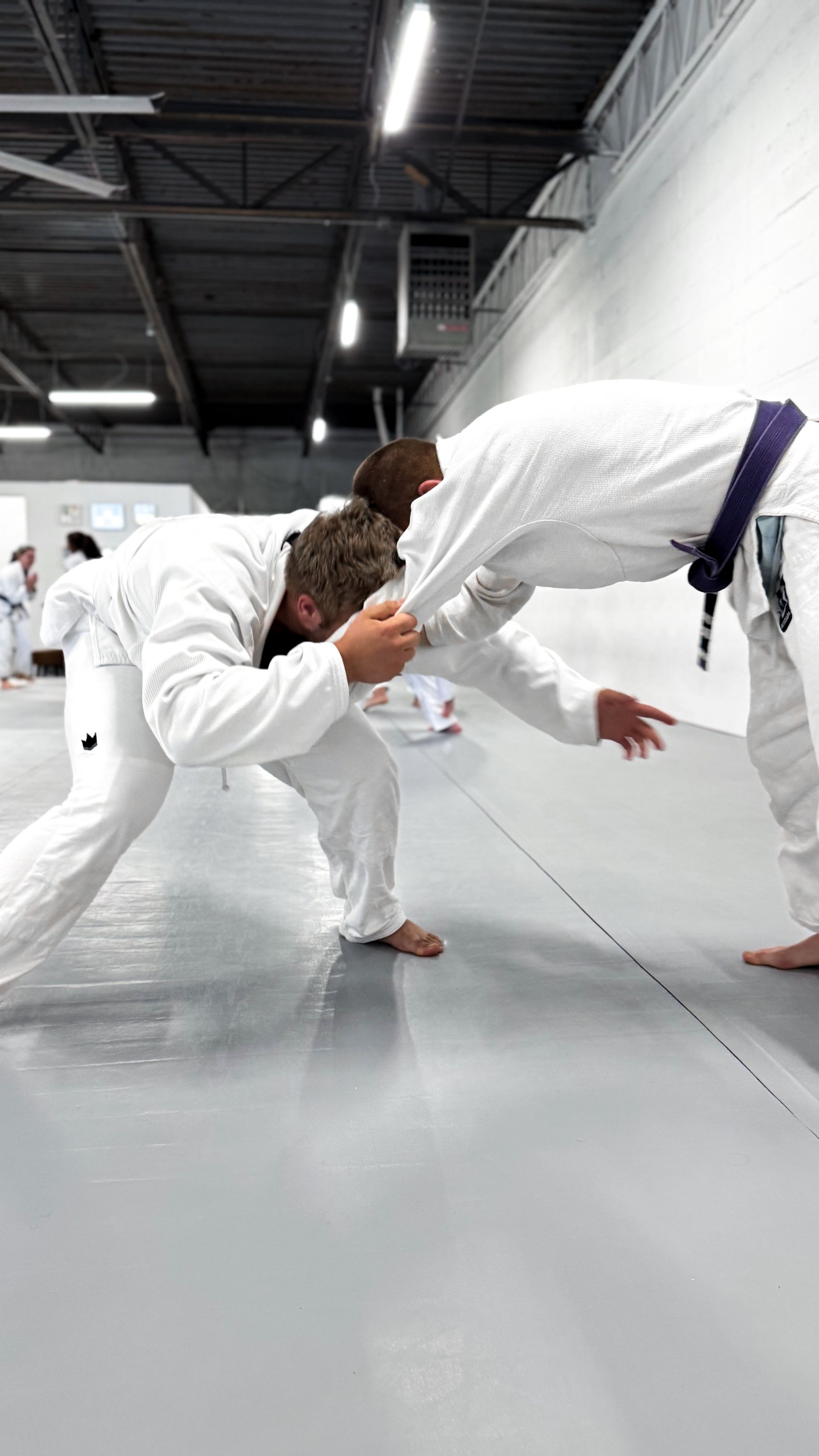
Anxiety often loops. Same thought, same fear, same mental replay. Jiu Jitsu interrupts that loop because it gives your brain a clean problem to solve. Where are your grips. What is the next step. How do you escape, improve position, or stabilize.
That kind of focused attention is one reason many adults describe training as mental relief. You do not have room to spiral when you are learning how to move with precision. It is not that your problems disappear. It is that your mind gets a break from constant rehearsal.
Progressive stress exposure builds confidence safely
A major reason anxiety sticks is avoidance. Avoiding discomfort feels good short term, but it teaches your brain that discomfort is dangerous. Jiu Jitsu gives you the opposite lesson in a safe way: you can feel pressure and still be okay.
We scale intensity, match partners thoughtfully, and teach tapping early. Each class becomes a controlled dose of challenge. And challenge, when it is structured, is one of the most reliable ways to build resilience.
What the research suggests about anxiety, resilience, and wellbeing
When adults ask, is Jiu Jitsu good for anxiety, we like to answer carefully. We cannot promise specific mental health outcomes for every person. But we can explain what the current evidence is pointing to.
A 2025 comparison study involving veterans and emergency services personnel found clinically relevant improvements in anxiety, depression, PTSD symptoms, sleep quality, and overall wellbeing in both Brazilian jiu-jitsu and a functional fitness program. That matters for two reasons. First, it suggests that consistent, community-based physical training can move the needle on mental health measures. Second, it highlights sleep, which is often a missing piece for anxious adults.
A separate 2025 veterans-focused study reported significant decreases in PTSD symptoms and meaningful increases in posttraumatic growth and resilience after regular jiu-jitsu participation. And in law enforcement populations, BJJ participation has been associated with reduced stress, anxiety, depression, and PTSD symptoms, with findings suggesting that participation itself may matter more than extreme training intensity.
One more 2025 study in BJJ athletes found that higher ranks, like black belts, scored higher in mental strength, resilience, self-efficacy, self-control, and life satisfaction than white belts, along with lower mental health disorder scores. We do not interpret that as rank equals happiness. We interpret it as a clue: long-term skill building, steady exposure to challenge, and consistent practice may strengthen the psychological traits that protect against anxiety.
Why adults in Yaphank choose a mat over another solo workout
Solo workouts can help with stress, and we are not here to talk you out of walking, lifting, or running. But many adults in Yaphank tell us the same thing: it is hard to stay consistent when you are on your own. Anxiety makes motivation unpredictable. Some days you feel driven, other days you feel stuck.
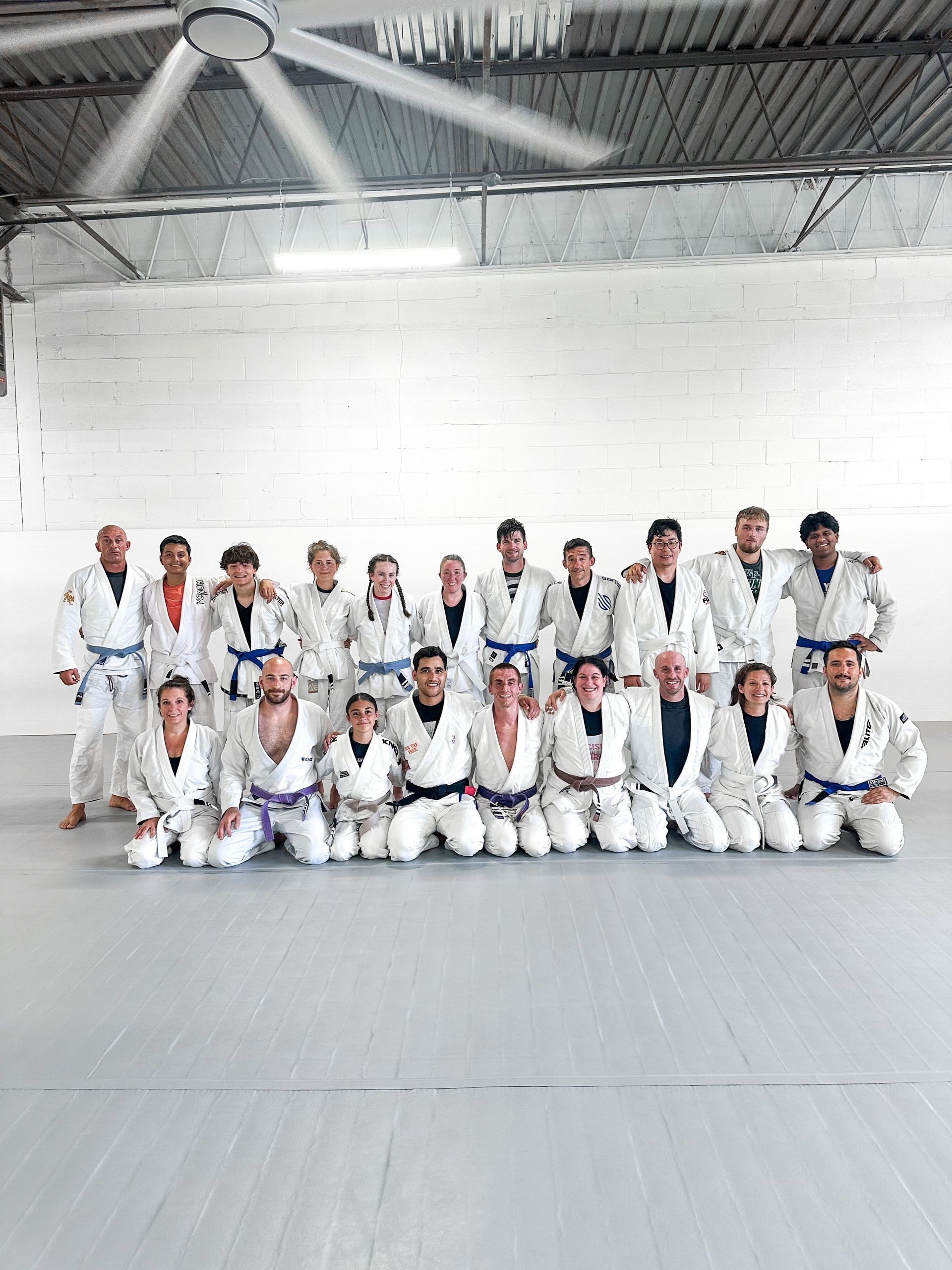
Jiu Jitsu is different because it is a class you show up to. There is a coach, a plan, and training partners who notice when you are missing. That is accountability, but it is also community, and community is a real ingredient in long-term stress management.
In a typical week, you are not just burning calories. You are learning a skill. That sense of progress is a form of relief. It gives you something concrete to point to: you escaped better today, you stayed calmer in a tough position, you remembered to breathe. Those wins are small, but they stack up.
What beginners can expect in our adult program
If you are searching for Adult Brazilian Jiu Jitsu in Yaphank, you are probably wondering the same things most beginners wonder. Do I need to be in shape. Will I be the only new person. Is it going to be intense and chaotic.
We build the beginner experience so you can settle in quickly. We teach fundamentals, keep the room respectful, and manage intensity. You will sweat, but you will also learn how to train without feeling like you are being thrown into the deep end.
Here is what your first few classes typically feel like:
- You learn basic positions and simple escapes that help you feel less trapped, which is important for anxiety-prone minds.
- You practice movement patterns that build coordination without needing athletic background.
- You drill techniques with a partner at a controlled pace before adding resistance.
- You get coached on breathing and pacing so you do not burn out in the first ten minutes.
- You leave feeling physically tired but mentally quieter, like your brain finally turned the volume down.
We also keep safety and communication front and center. Tapping is normal. Asking questions is normal. Taking breaks is normal. Consistency is the goal, not proving something in day one.
How often should you train to feel benefits
Adults often assume they need to train every day to get anything out of it. That assumption can turn into pressure, and pressure is the last thing an anxious person needs.
A more sustainable approach tends to work better. Research in law enforcement populations suggests benefits may come from participation itself more than pushing intensity to extremes. That aligns with what we see: a realistic schedule that you can maintain is more valuable than a short burst of overtraining.
If you are deciding where to start, we usually recommend this progression:
1. Begin with two classes per week to learn the basics and let your body adapt.
2. Add a third class when you feel recovery improving and the routines feel familiar.
3. Use one session as a lower intensity day focused on drilling and breathing control.
4. Track non-scale wins like calmer breathing, better sleep, and less mental noise after training.
5. Reassess monthly based on how your joints, energy, and schedule are holding up.
That last point matters. Anxiety management is about steadiness. A plan that fits your life is the plan you will actually follow.
Sleep, stress, and the after-class calm
Many adults come to Jiu Jitsu for confidence or self-defense, then notice a second benefit they were not expecting: better sleep. Part of that is physical exertion. Part of it is nervous system regulation, learning to come down from pressure. And part of it is simply having a routine that creates separation between work stress and the rest of your evening.
In that 2025 study comparing Brazilian jiu-jitsu and functional fitness in veterans and emergency services personnel, sleep quality improved alongside anxiety and depression measures. Again, we cannot promise the same outcome for everyone. But it makes sense mechanistically. When you train, you move, you sweat, you breathe, and you complete something challenging. Your body understands that as a full stress cycle with an ending, which is not always true of modern stress.
Confidence without ego: the quiet power of progress
Anxiety often comes with self-doubt. You second-guess yourself. You wonder if you are capable. You avoid situations where you might feel exposed. Jiu Jitsu rebuilds confidence in a grounded way because you test your skills against real resistance, but in a supervised environment.
That is also why self-efficacy shows up repeatedly in the research. When you learn how to escape a bad position, or how to stay calm while someone is trying to control you, you start trusting yourself in a new way. It is not loud confidence. It is quiet. It feels like, I can handle this.
Our culture is built around steady improvement. We care about training partners feeling safe, respected, and supported. When the room is ego-free, anxious adults can finally relax enough to learn.
FAQ: Jiu Jitsu in Yaphank and anxiety-focused training
Is Jiu Jitsu good for anxiety
Evidence increasingly suggests Jiu Jitsu participation is associated with reduced anxiety symptoms and improved wellbeing in several adult groups, but individual results vary and it is not a clinical treatment.
Do I need to be in shape before I start
No. We coach you to start where you are, manage intensity, and build conditioning through consistent practice.
Is it safe for adults with no martial arts background
Yes, when it is taught with structure. We emphasize fundamentals, partner communication, and gradual progression so you can learn safely.
Will training help my confidence
Confidence and self-efficacy are common outcomes reported in both research and real training settings because you build skills through measurable progress.
Can Jiu Jitsu help with sleep and stress
Some studies have found improvements in sleep quality alongside mental health measures, and many adults report feeling calmer after class due to physical exertion and breath control practice.
Ready to Begin
If you want a practical way to build calmer focus, stronger boundaries, and real confidence, we have built our programs to make that process simple and approachable. Training can be challenging, but it should not feel chaotic, and it should never feel like you have to earn the right to belong.
At
Breathe Jiu Jitsu, we teach Adult Brazilian Jiu Jitsu in Yaphank with a steady, beginner-friendly path that emphasizes breath, movement, and progressive skill-building. If anxiety has been taking up too much space in your life, we would love to help you replace some of that noise with a clear plan and a supportive routine.
Take your first step onto the mats and discover a
supportive training environment at Breathe Jiu Jitsu.