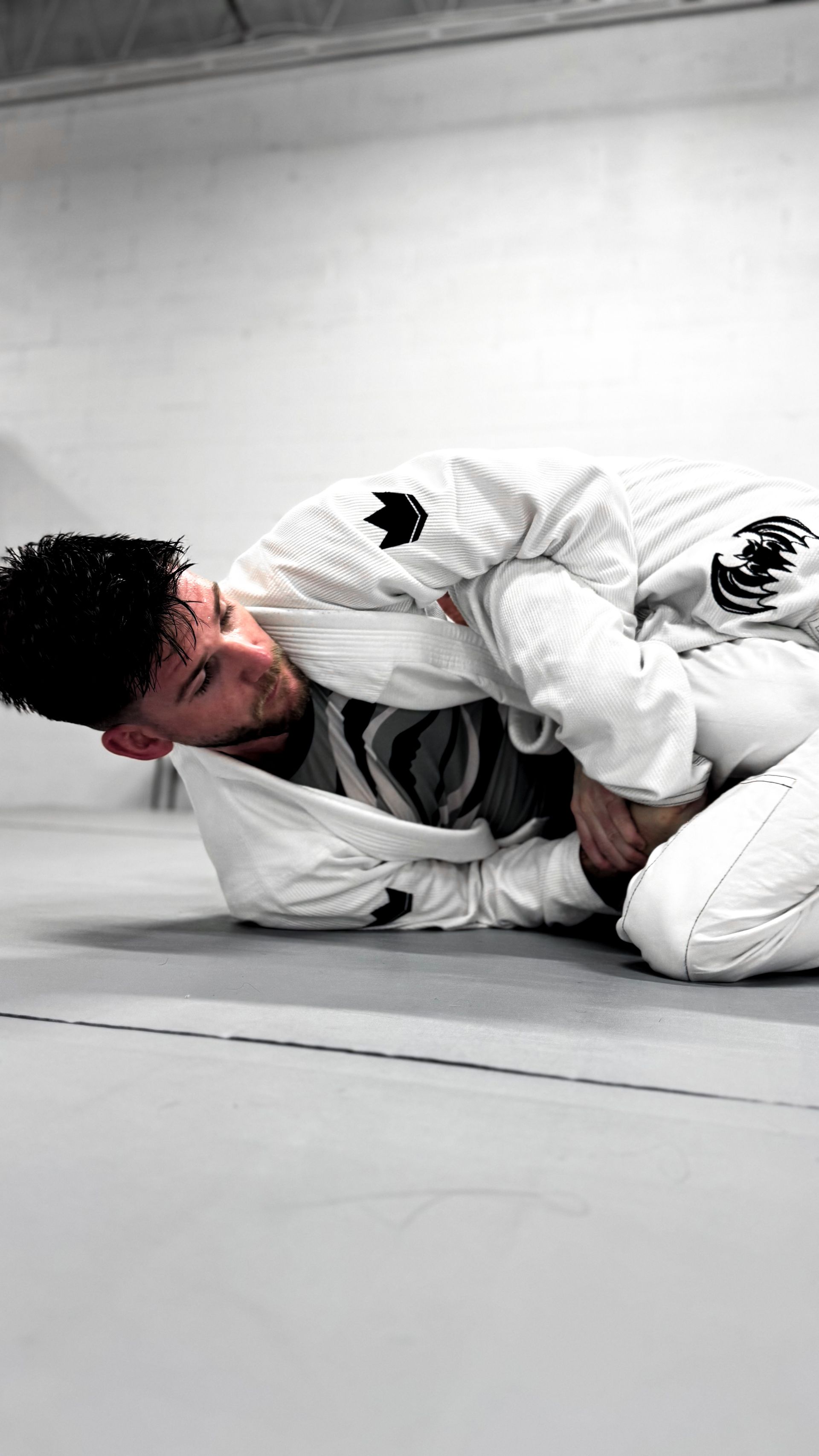
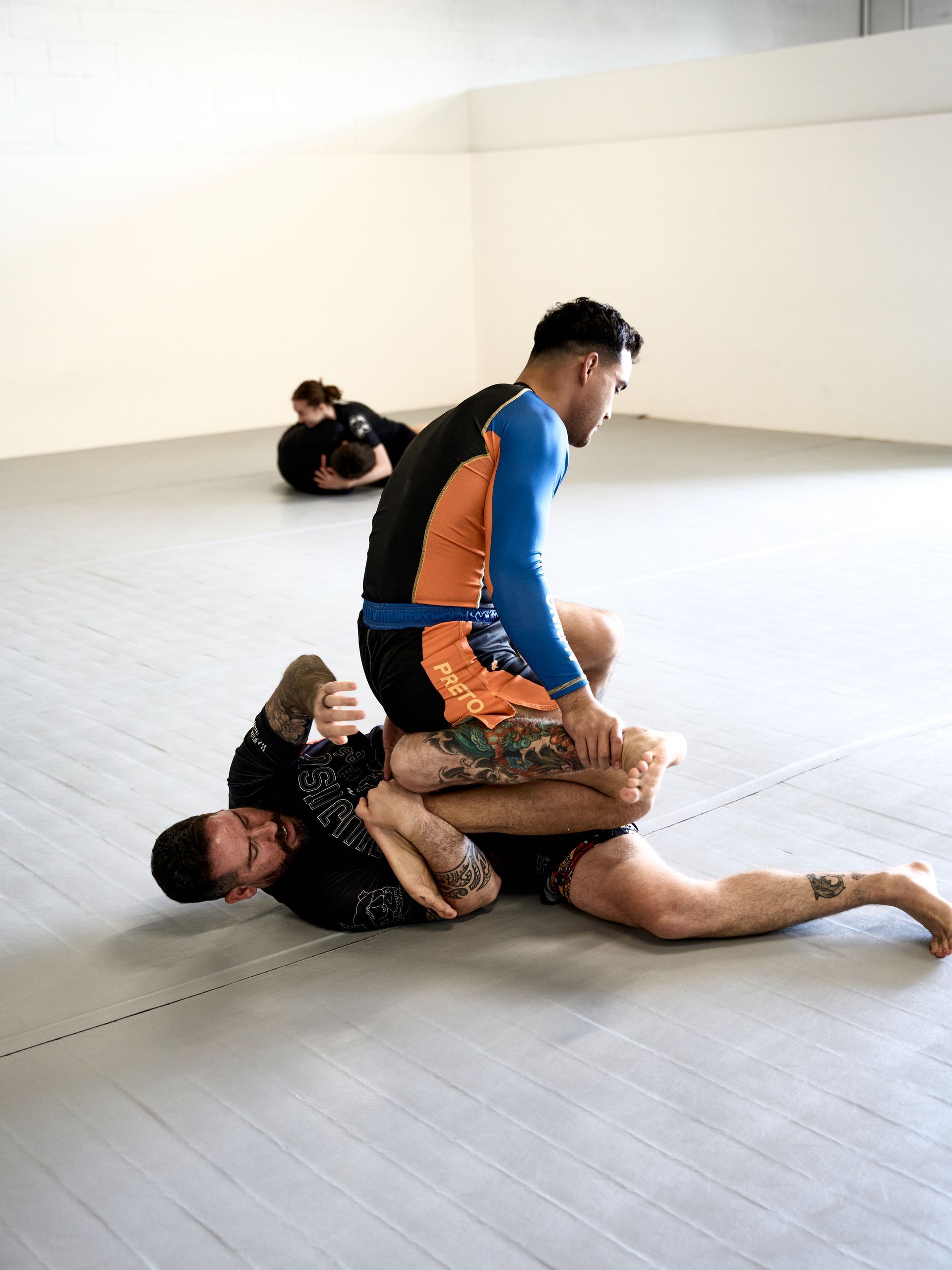
You do not need to be naturally bendy to move better on the mats, you need a smarter plan and consistent reps.
If you are starting Jiu Jitsu in Yaphank, NY, one of the first things you notice is how often your hips, shoulders, and spine get asked to do very specific jobs. Guard retention, standing up in base, pummeling for underhooks, framing under pressure, inverting even a little bit, it all rewards mobility. The good news is that flexibility and mobility are trainable faster than most people expect.
We work with busy adults who want progress without living in the gym. That means we care about methods that actually translate to better movement in live training, not just feeling loose for five minutes. When your joints move well and your muscles can lengthen under control, techniques feel smoother, your breathing stays calmer, and you get hurt less often.
In this guide, we will break down how to build real flexibility and mobility quickly for Jiu Jitsu, what to do before and after class, and the short daily routines that help you change your body in weeks, not years.
Flexibility vs mobility: the difference matters in Jiu Jitsu
People use the words interchangeably, but they are not the same, and Jiu Jitsu exposes the gap fast.
Mobility is your joint range of motion that you can actively control. Think hip rotation when you recover guard, shoulder movement when you frame, or ankle mobility when you stand up from kneeling. Flexibility is your muscle’s ability to lengthen, like hamstrings in a forward fold or groin in a wide base.
In grappling, we need both. If you only stretch passively, you might get looser, but you still cannot use that range under pressure. If you only do strength work without opening restricted positions, you can feel powerful while still moving like a folding chair. Our goal is controlled range, because control is what keeps you safe when someone is trying to collapse your posture.
Why better mobility makes techniques easier, not just “prettier”
Mobility is not an accessory skill. It is a performance skill.
When your hips open, your guard becomes less frantic. You can place your feet where you want instead of where you can. When your thoracic spine rotates well, you can turn in for underhooks and sit-ups without wrenching your neck. When your shoulders move freely, your frames become more durable and your escapes stop feeling like you are fighting your own body first.
It also changes how you use energy. Tight joints force compensations, and compensations cost gas. If you have ever felt “tired for no reason” during rounds, limited mobility is often part of the story.
The fastest path: pair mat time with short, targeted daily work
We like simple plans that you will actually do. For most adults, the fastest improvement comes from two layers:
First layer is consistent classes, because sport-specific movement teaches your nervous system how to coordinate. Second layer is a short daily routine, five to ten minutes, focused on the joints that get stressed the most in Jiu Jitsu: hips, knees, shoulders, and spine.
If you do an hour-long stretch once a week, it feels productive but it rarely sticks. If you do seven minutes most days, your body adapts. Tendons and joint capsules respond to frequent, low-intensity exposure, especially when you are not forcing end ranges cold.
One more practical point: we want you to feel better, not wrecked. Stretching should feel like steady pressure, not a fight.
Pre-class mobility: what we want you doing before you roll
Before class, we focus on warming tissues and creating active range. Static stretching before hard rounds can make you feel relaxed but less responsive, especially if you hold long positions. Instead, we use movement-based prep.
A solid pre-class warm-up should make you slightly warm, slightly sweaty, and mentally switched on. You should also feel your hips and shoulders moving through larger circles than they did when you walked in.
Here is what tends to work well for most students:
- Hip openers that include rotation, not just forward lunges
- Shoulder circles and scapular control, because frames and posting matter
- Light spinal segmentation, like cat-cow variations, to reduce “stiff back” rounds
- Short squat holds with shifting, to prep knees and ankles for base changes
We also cue breathing. If you can inhale through your nose and stay calm while moving, your body stays more supple and you learn faster.
Post-class flexibility: when static stretching actually helps
After training, your tissues are warmer and your nervous system has experienced the exact ranges you need. This is the best time to use slower holds and downregulate.
We encourage you to stretch the positions that felt tight during rolling. If your knees felt cranky from half guard, prioritize hips and quads. If your shoulders felt jammed from framing, open the chest and lats. This is also when a short yoga flow can help, because it links positions together and teaches you to breathe through transitions.
Keep holds moderate, about 30 to 60 seconds per side, and avoid pushing into sharp pain. “Deep” is not the goal. Controlled is the goal.
The three drills we recommend for fast, functional gains
We keep coming back to a few staples because they map well to common Jiu Jitsu positions. These are not random stretches, they are joint-specific tools that tend to show up quickly in your guard, your escapes, and your overall comfort.
Lizard pose for hips and groin, built for open guard
Lizard pose is a deep lunge variation that targets hip flexors and adductors. Those are exactly the tissues that complain when you start playing open guard, pummeling your legs inside, or trying to keep your knees wide without your lower back doing all the work.
How we like to do it:
- Start in a long lunge with your front foot outside your hand
- Keep your back leg active, not collapsed
- Lower to forearms if it is available without pinching your hips
- Add gentle rocking forward and back to turn it into mobility, not just a hold
If you only do one lower-body drill consistently, this is a strong candidate.
Pigeon pose with a kimura-style grip for hips and shoulders
Pigeon is a classic hip opener, but we like pairing it with an upper-body position that reinforces grappling-specific tension and shoulder control. A kimura-style grip behind your back, held gently, opens your chest and shoulders while you work hip external rotation.
Use it like this:
- Set up pigeon comfortably, with a pad under the hip if needed
- Stay tall for a few breaths
- Add the grip behind your back only if it is painless
- Breathe slowly and let your exhale soften the hips, not your joints
This drill is especially helpful if you feel “stuck” when trying to angle for submissions or when your hips refuse to rotate during guard attacks.
Short vinyasa-style flows for full-body coordination
Recent training trends have pushed toward short, daily flows for a reason. They work. Five to ten minutes of linked movements can improve shoulders, hips, knees, and even your ability to move smoothly from one base to another. That is very Jiu Jitsu.
We prefer flows that include:
- Plank to downward dog for shoulders and posterior chain
- Low lunge to half split for hip flexors and hamstrings
- Controlled rotations for thoracic spine
- Squat transitions, because base changes are constant in grappling
This is also an easy at-home habit. Roll out of bed, move for seven minutes, and you have already done something that supports your next class.
A simple 10 minute routine for busy adults in Yaphank
If you want a plan you can repeat, here is a straightforward sequence we recommend. Do it once a day or at least after training sessions. The goal is consistency, not heroics.
1. Nasal breathing in a tall kneel for one minute to settle your ribs and posture
2. Cat-cow plus thoracic rotations for two minutes to loosen the spine and shoulders
3. Lizard pose with gentle rocking for two minutes per side to open hips and groin
4. Pigeon pose for one minute per side, adding the kimura-style grip only if comfortable
5. Deep squat hold with side-to-side shifting for one minute to prep knees and ankles
If you do this daily for two weeks, most people notice better guard comfort and fewer “tight first round” feelings. It is not magic, it is exposure and control.
Common sticking points and how we coach around them
“I am stiff, so I should wait until I get flexible to start”
Starting is what makes you flexible. We progress movements so you can train safely right away. Jiu Jitsu is full of scalable positions: we can adjust ranges, intensity, and pacing while you build capacity.
“My knees feel vulnerable in certain guards”
This is common, especially when your hips do not rotate well and your knees end up taking the twist. We focus on hip mobility, glute activation, and clean knee alignment during technical reps. Mobility without control can be risky, so we coach both.
“I stretch, but nothing changes”
Most of the time, the issue is dosage and timing. Short daily work plus post-class stretching tends to beat long sessions done occasionally. Another common issue is skipping active range. You want to be able to hold positions, not just fall into them.
How flexibility shows up in real rounds and real progress
You can measure mobility in ways that actually matter on the mat. When it improves, you usually notice it here first:
• Guard retention feels less frantic because your hips can rotate and reinsert frames
• Open guard becomes more comfortable because your knees can separate without strain
• Escapes improve because you can shrimp and turn without your lower back locking up
• Submissions feel cleaner because you can angle your body instead of muscling grips
• Recovery between rounds gets easier because you stay calmer and breathe better
This is why we treat mobility as part of skill development, not a separate hobby. Jiu Jitsu rewards the person who moves efficiently, not the person who just grinds harder.
Ready to Train Smarter in Yaphank
If your goal is to build real flexibility fast for Jiu Jitsu, the best approach is combining coached mat time with simple, repeatable mobility work you can stick to. We keep it practical: movement that supports guard play, escapes, and injury prevention, especially for adults juggling work, kids, and Long Island schedules.
At
Breathe Jiu Jitsu, we fold mobility and control into how we teach, so you are not guessing which stretches matter or how hard to push. If you are in Yaphank, NY and you want Jiu Jitsu in Yaphank to feel better in your body week after week, we would love to help you start with a plan that makes sense.
Build resilience, focus, and real skill by
training in Jiu‑Jitsu at Breathe Jiu‑Jitsu.